http://learninternetgovernance.blogspot.com/p/new-to-internet-governance.html

Tuesday, May 2, 2017

Awarness and Capacity Building program for Nepal IGF abut IG process

Learn Internet Governance

A program was organized by Internet Society Nepal Chapter on 1st May 2017 in view of sharing ideas and thoughts about the Internet Governance Process in Nepal.

The local alliance had formed a Multi-stakeholder Steering Group (MSG)  which has been managing the Nepal IGF. Internet Society Nepal Chapter had submitted the proposal to host the Nepal Internet Governance Forum for 2017, in view of raising 
awareness and resource Shreedeep Rayamajhi from Learn IG, gave the presentation about IGF and its process and various aspect of conducting National initiative. 


Presentation Link: https://www.slideshare.net/ShreedeepRayamajhi/igf-and-its-process

Tuesday, April 25, 2017

Why we need youth leadership and involvment in Internet governance process ?

Learn Internet Governance


Internet has been very dynamic in its operation, management and logistic. From the day it was created to this day it has been very dynamic about its growth and popularity but very stable and fixed about its core values. To this day it has proved that controlling and trying to rule internet is not a question of efforts or argument but it is an issue of its management and operation. Like the 4 core values of internet, it needs to be open and collaborative in every aspect of its cooperation and existence.     

Core values of Internet 
  1. End to End Principle
  2. Open standards
  3. Freedom of Expression (FoE) 
  4. Universal Access
Though created as a military project, internet  has currently adopted the form of basic human rights and is growing to the extent of making lives easier and sustainable. 
With a long history of infiltration and surveillance, internet has never been separated from being limited within a community or limitd values. It has always been dynamic and adaptive in every action and in communication process. It's progressive nature created its popularity where it grew from a small network to a hub of  world of world wide web that is easily accessible, reliable and safe. 

With this growth and development today internet is not just the property of the people who developed it but has significantly stood as a representation of human achievement and endurance.

Today when we talk about Internet governance, we certainly make a point of highlighting  the concept of multitstakeholderism. It is basically  a dynamic concept of idealizing and accepting the values of cooperation and collaboration with respect to stakeholders and their  respected jobs where the role of stakeholder cannot be ignored. IG is process driven by various stakeholders at levels of communication. 

The basic reason for youth involvement in the IG process are given as below    
  1. Leadership 
  2. Communication
  3. Equality and open standards 
  4. Collaboration and cooperation 
  5. Adaptation
  6. Innovation
  7. Dynamism 
  8. Growth and development  
  9. Standardization
  10. Diversity 
  11. Sustainable Development 
  12. Creating New values 
  13. Building trust 


Saturday, April 22, 2017

A new opportunity for the youths: 25 Under 25

Learn Internet Governance


The world of today mostly buzzes with social media and Hash tags. For a youth it’s a complicated dynamic world of internet where everything is yellow and every other day is blue. It is just the tons and tons of messages and notifications that pops up every other minute where no internet means no life.

Internet has become the thing where it is just incomparable to anything except being alone with a nightmare. Everyday my mom shouts waiting on me for food, how many hours do you sit in front of your laptop and yet the answer goes silence in view of keeping it still. I tell her, mom it’s the world of dreams where everything is possible. Even at 70, she uses Facebook and owns a smart phone so she is pretty reluctant about using the Alien device.

Talking more about the past, it is just an endless story that really excites and makes me feel contained within the world which is so easy to navigate and which absorbs my energy. I have seen the rendition of big bulky computers to the slimming smart technology which literally changed our lives. Money was always an issue but the interest always fought to find a solution. From Nokia mobile to Dell laptop to Gmail invitation, technology has fought back in neutralizing popularity and interest. It is what we people have created and believed in rather than how it has transcended.

A journalist, blogger, activist and a consultant, internet made me who I am and still I am exploring the possibilities of my virtue. Nothing was easy but the point is standing for change and adapting technology was one of the best thing that life gave me. Moreover, being associated with Internet Society(ISOC) was an accident that changed my life forever. It was just by accident when I search for Internet Society in the web and became a member in 2006. I guess I was destined to be associated with ISOC.    


Once someone told me that, till the time you realize how life changes, things slip away, so it is better to go with the flow accepting than complaining. Internet and change goes hand to hand, using the technology to the ultimate level of exploring the possibilities was something highly questionable then.

I started my career as a journalist. A fair and square storyteller with values of creating change. Those were the days when I use to search the available search engine and scope the possibilities of my name and nothing would come up. In view of creating my name in the World Wide Web, I started blogging, writing stories and voicing issues.

I realized, the power of internet when I published a story in one of the citizen journalism site Ground report and it was picked up by Access now and they launched an international campaign “Nepal Shutdown Showdown”, Man I felt powerful !!!


It was not only standing for change but I think it was more about standing for your rights and voicing what can be done.

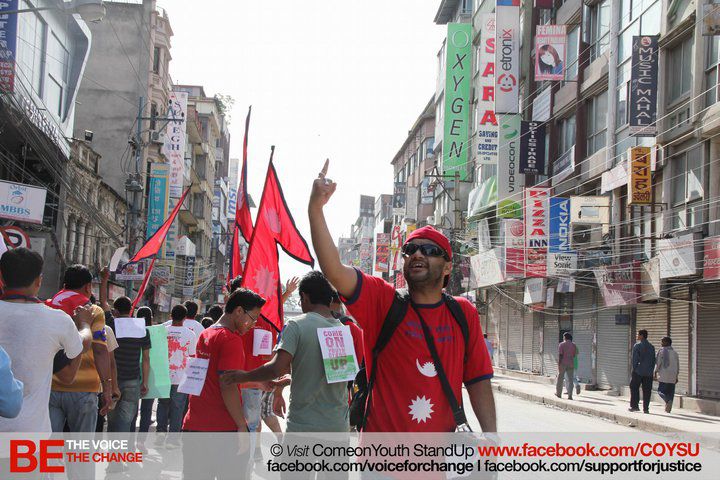
In 2011 with the revolution of social media we launched internet activism in Nepal. Various campaigns against the political leaders were launched voicing issues of concern. We used the available technology and network in creating a solution for the frustration of what we believe in. The campaign created a ripple in the political hemisphere and we made our point.


Working with ISOC was a rendition of my skills where I grew from a limited scope to an attitude of multistakeholder perspective that broaden my vision and leadership skills. Being the ISOC Ambassadors for 2014 and 2015, it was limitless opportunity, that changed my life forever. Who could have thought a guy coming from a least developed country like Nepal was standing in-front of hundreds and thousands of people of the internet world and voicing the issues of human rights, FoE and internet standardization. I felt proud in everyday to say I represented Nepal for being a youth for change. ISOC gave me the opportunity, leadership, communication skill and networking to be who I am.


It was not just the attitude but it was more of a support that the leadership and the community that gave me. For me internet was not only a means of communication but slowly I was moving on to understand Internet was changing my life in every possible way of giving new vision and leads.

Moreover, the thing that changed my perspective about internet was during the earthquake of 2015. It was massive and everything was doomed but one thing that came as a rescue was the internet.

Every day I would open the TV and was sick and tired of seeing people crying and saying the government was not doing nothing so we decided to do something. We took it to ourselves and started posting messages in our social media, one after the other people showed their interest. Some gave away spare food, some with medical supplies, some with material and we helped people. That day I realized the importance of internet and how we could bridge the gaps of changing the world. Complaining was not an option but finding a solution was always the task. Helping people coordinate and distribute food and material was something that changed my perspective of how we can use technology. Touching the hearts of thousands of people was something special which was possible just because of the internet and we helped people to the possibility.  


That day the definition of internet changed, internet for me was not just possibilities but it stood as a helping hand, it was humanity for all those people ………………… Internet is not just for entertainment speak up, voice out and be the change

BE YOUTH…………….

Stop being vulnerable, start being the CHANGE: 25 Under 25

Show the world what you are made of……………………

BE THE CHANGE

Saturday, April 15, 2017

Internet Society Launched 25 under 25

Learn Internet Governance

Celebrating its 25 years anniversary, the Internet society has launched a new youth leadership campaign "25 Under 25 " to promote youth leadership and innovation working towards change. 

The Basic Criteria for participating in the Campaign are:   
  1. Between the ages of 13-25 as of 31 December 2017
  2. Who use the Internet to make a positive impact
  3. Demonstrate commitment and passion to serve society
  4. Are making a difference where they live
  5. Show promise for continuing their outstanding work on the Internet
  6. Have ideas that can be implemented around the world
  7. Are recognized and respected by peers
The Awardees will be guests at a reception in their honor co-located with the 2017 Internet Hall of Fame induction ceremony in September. There will be plenty of opportunities for the 25 under 25 awardees to network with the Internet pioneers, innovators and global connectors who made significant contributions to the development and advancement of the Internet.

The  Nominations open from 16 March  and closes on 31 May. Awardees will be notified by 27 June.

Link: https://www.internetsociety.org/25th/25-under-25


Wednesday, January 25, 2017

IGF and its Best Practice Forums(BPFs)

Learn Internet Governance
The Internet Governance Forum (IGF) serves to bring people together from various stakeholder groups as equals in discussions on public policy issues relating to the Internet. While the IGF has no negotiated outcomes, it serves the important function of informing and inspiring those with policymaking power in both public and private sectors.  

The IGF facilitates a common understanding of how to maximise Internet opportunities and address risks and challenges that arise. One of the ways in which it does so is through its intersessional activities, which are conducted following recommendations from the UN CSTD Working Group on Improvements to the IGF and form part of a broader effort by the IGF community to produce more tangible outputs to “enhance the impact of the IGF on global Internet governance and policy”.

About the IGF’s intersessional activities

The IGF Best Practice Forums (BPFs) continue to offer unique platforms to investigate topical Internet policy challenges by collecting community input and experiences in a flexible and bottom-up manner. Through their substantive outreach efforts and continued calls for input and contributions, the BPFs have already enabled more diverse and varied participation in IGF processes, including from a richer variety of regions and stakeholder groups. By continuously involving new people in their work, the various BPFs also contributed to enlarging the global footprint of the IGF.  BPFs worked throughout the year in an open and inclusive way via open mailing lists, regular virtual meetings, and BPF workshops during the 11th IGF meeting in Guadalajara, Mexico, from 6 to 9 December 2016.

About the BPF Gender
The BPF Gender’s second publication, entitled Overcoming Barriers to Enable Women’s Meaningful Internet Access’, builds on its work in 2015, when it also published an extensive resource on online abuse and gender-based violence. In 2016, the BPF furthermore produced a user-friendly infographicroadmap for addressing online abuse and gender-based violence, based on the key recommendations for diverse stakeholder groups from its 2015 report. The BPF Gender is also partnering with ITU and UN Women’s EQUALS partnership, a global initiative aimed at addressing gender inequality, to raise awareness of its outputs. Further details of this collaboration will soon be announced.
About the BPF Cybersecurity

The 2016 IGF BPF on Cybersecurity built upon the previous work of the IGF CSIRTS and SPAM BPFs. Its work was also guided by the WSIS +10 review process which produced an outcome document with a strong focus on "building confidence and security in the use of information and communications technologies", making an IGF BPF related to cybersecurity even more relevant. The 2016 discussions and output report addressed cooperation and collaboration on cybersecurity issues between stakeholder groups as an overarching theme.

About the BPF on Internet exchange points (IXPs)

The BPF Contributing to the Success and Continued Development of Internet exchange points (IXPs) collected best current practices that have proven to contribute to building strong and successful IXPs. Exchanging traffic at an IXP has a number of benefits that can contribute to a more affordable, stable, faster and more reliable Internet of a higher quality in a region. The success of an IXP will be measured by its ability to sustainably contribute to the development of its local Internet ecosystem. The BPF on IXPs focused on the management and operation of an IXP and identified factors that can contribute to success.

About the BPF IPv6

IPv6 is the Internet’s addressing system that was developed to deal with IPv4 exhaustion and to make the Internet future-proof. The fast growing number of networks that already supports IPv6 today proofs that IPv6 is a technically feasible option for business. The BPF Understanding the commercial and economic incentives behind a successful IPv6 deployment collected case studies on commercial experiences with IPv6 deployment to better understand challenges and incentives, and provide an opportunity to learn from each other.

About Policy Options for Connecting and Enabling the Next Billion(s) - Phase II

In 2016, the IGF furthered its seminal work on Policy Options for Connecting and Enabling the Next Billion(s) by investigating challenges and opportunities for addressing and overcoming barriers to meaningful Internet access, promoting meaningful access in diverse contexts and regions, and ensuring that meaningful access also supports the achievement of the UN sustainable development goals. Read the report here.

Source: IGF 

Tuesday, January 17, 2017

The World Summit on the Information Society Forum (WSIS)

Learn Internet Governance


The World Summit on the Information Society Forum (WSIS)  represents the world's largest annual gathering of the ‘ICT for development’ community. The annual WSIS Forum is a global multi-stakeholder platform facilitating the implementation of the WSIS Action Lines for advancing sustainable development. The Forum is co-organized by ITU, UNESCO, UNDP and UNCTAD, in close collaboration with all WSIS Action Line co-/facilitators and other UN organizations (UNDESA, FAO, UNEP, WHO, UN Women, WIPO, WFP, ILO, WMO, ITC, UPU, UNODC, UNICEF and UN Regional Commissions). It provides an opportunity for information exchange, knowledge creation and sharing of best practices, while identifying emerging trends and fostering partnerships, taking into account the evolving Information and Knowledge Societies.

In follow up to the outcomes of the UN General Assembly Overall Review of the Implementation of WSIS Outcomes (Res. A/70/125) and with the adoption of the 2030 Agenda for Sustainable Development (Res. A/70/1), the WSIS Forum is constantly evolving and strengthening the alignment between the WSIS Action Lines and the Sustainable Development Goals. The WSIS Forum will therefore serve as a key forum for discussing the role of ICTs as a means of implementation of the Sustainable Development Goals and targets, with due regard to the global mechanism for follow-up and review of the implementation of the 2030 Agenda for Sustainable Development (UNGA Resolution A/70/1).

The WSIS Forum is the only event of its kind where the programme is completely crowdsourced. Therefore, as organizers, ITU, UNESCO, UNCTAD and UNDP, are pleased to announce the Open Consultation Process on thematic aspects and innovations on the format of the WSIS Forum 2017.

The process aims at ensuring a participatory and inclusive spirit of the Forum, scheduled to be held from 12-16 June 2017 at ITU in Geneva. This process actively engages governments, civil society, the private sector, academia, the technical community and intergovernmental organizations in the preparatory process to ensure broad ownership and further improvements of the Forum.The Open Consultation Process will include a collection of inputs from regional and national WSIS related events. The physical meetings of the Open Consultation Process will benefit from remote participation.

The World Summit on the Information Society (WSIS) is a unique two-phase United Nations (UN) summit that was initiated in order to create an evolving multi- stakeholder platform aimed at addressing the issues raised by information and communication technologies (ICTs) through a structured and inclusive approach at the national, regional and international levels. The goal of WSIS is to achieve a common vision, desire and commitment to build a people-centric, inclusive and development-oriented Information Society where everyone can create, access, utilize and share information. The UN General Assembly Resolution 56/183 (21 December 2001) endorsed the holding of the World Summit on the Information Society (WSIS) in two phases. The first phase took place in Geneva from 10 to 12 December 2003 and the second phase took place in Tunis, from 16 to 18 November 2005. In 2003, the number of participants was 11,000 representing 175 countries and in 2005 the number of participants was more than 19,000 representing 174 countries. Since then, a cluster of WSIS-related events was held on an annual basis. In 2009, the cluster of WSIS-related events was re-branded as WSIS Forum.

-WSIS Forum 2016
-WSIS Process

What is Data Revolution ?

Learn Internet Governance


The need for a ‘data revolution’ was first expressed by the High Level Panel, appointed by UN Secretary-General Ban Ki-moon to advise on the global development agenda after the 2015 millennium development goals (MDGs).

The High Level Panel report was quite brief, leaving quite a lot of room for interpretation:

“Better data and statistics will help governments track progress and make sure their decisions are evidence-based; they can also strengthen accountability. This is not just about governments. International agencies, CSOs and the private sector should be involved. A true data revolution would draw on existing and new sources of data to fully integrate statistics into decision making, promote open access to, and use of, data and ensure increased support for statistical systems. ” (HLP Report, P23)
Most people are in broad agreement that the ‘data revolution’ refers to the transformative actions needed to respond to the demands of a complex development agenda, improvements in how data is produced and used; closing data gaps to prevent discrimination; building capacity and data literacy in “small data” and big data analytics; modernizing systems of data collection; liberating data to promote transparency and accountability; and developing new targets and indicators.

There are different actors in this field, focusing on the different elements above. At the heart of this agenda is an acknowledgement that timely, usable data is critical to informed decision-making, monitoring of progress , and evaluation of outcomes—especially in the the context of the post-2015 development agenda.What is the ‘data revolution’?

The need for a ‘data revolution’ was first expressed by the High Level Panel, appointed by UN Secretary-General Ban Ki-moon to advise on the global development agenda after the 2015 millennium development goals (MDGs).

The High Level Panel report was quite brief, leaving quite a lot of room for interpretation:

“Better data and statistics will help governments track progress and make sure their decisions are evidence-based; they can also strengthen accountability. This is not just about governments. International agencies, CSOs and the private sector should be involved. A true data revolution would draw on existing and new sources of data to fully integrate statistics into decision making, promote open access to, and use of, data and ensure increased support for statistical systems. ” (HLP Report, P23)
Most people are in broad agreement that the ‘data revolution’ refers to the transformative actions needed to respond to the demands of a complex development agenda, improvements in how data is produced and used; closing data gaps to prevent discrimination; building capacity and data literacy in “small data” and big data analytics; modernizing systems of data collection; liberating data to promote transparency and accountability; and developing new targets and indicators.

There are different actors in this field, focusing on the different elements above. At the heart of this agenda is an acknowledgement that timely, usable data is critical to informed decision-making, monitoring of progress , and evaluation of outcomes—especially in the the context of the post-2015 development agenda.

http://www.undatarevolution.org/report/